
Allstate Motor Club
Allstate Enterprises, LLCAuto & Vehicles
3.4500.00 Reviews
- Version
- 21.1.0
- Installs
- 100.00K
- Age Rating
- Everyone
Screenshots
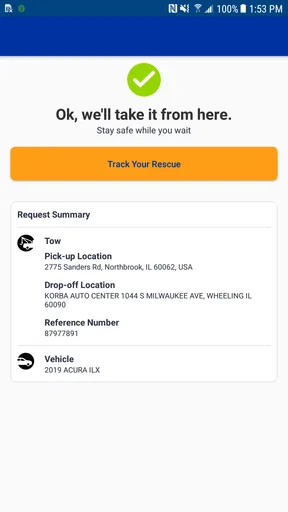
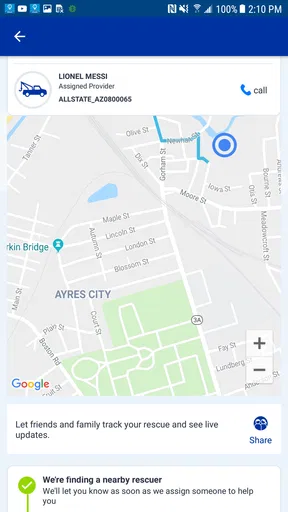
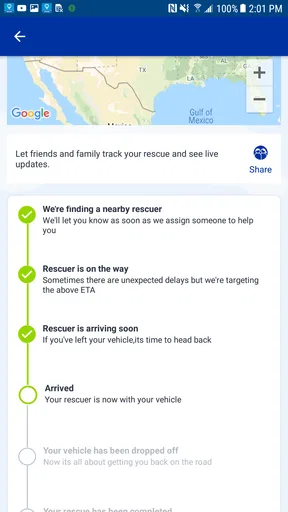
Our Review of Allstate Motor Club
 Analysis by Appyee
Roadside trouble tends to happen at the least convenient moment: on the way to work, during a family trip, or just after leaving a supermarket car park. I approached Allstate Motor Club as a practical Auto & Vehicles app rather than something I would open for entertainment. Its purpose is simple: keep roadside assistance within reach and make help easier to manage when driving goes wrong. That narrow purpose is also the key to judging it fairly. The app is useful when it supports a real membership and a real need, but it is not a universal replacement for every roadside service.
Developed by Allstate Enterprises, LLC, the app is free and aimed at Everyone. It has been available since August 30, 2016, and the current release is version 21.1.0, with Android support starting at version 6.0. Those details make it accessible to many older Android phones, although access to an app does not automatically mean that the underlying motor club service will suit every driver. I would treat the application as the digital doorway to roadside help, not as a standalone mechanic, insurance tool, or vehicle diagnostic system.
What Allstate Motor Club feels like in everyday use
I find the everyday value of Allstate Motor Club less in frequent screen time than in knowing where I would begin if a drive went wrong. That makes a quick, calm check of the app before a trip more useful than exploring it while distracted or already stranded. Next, I’d consider how comfortably that kind of preparation fits different ways of seeing, hearing, and using a phone.
The first-week appeal is mostly about reassurance
During the first few days, the strongest benefit is psychological rather than technical. Having a dedicated place for motor club assistance can make a long drive feel less exposed. I like the idea of preparing for a breakdown before one happens, because panic makes even basic decisions harder. If the app is already installed and the membership details are ready, I do not have to begin by searching the web for a service number while standing beside a disabled car.
That preparation is more valuable than repeatedly browsing through the app out of curiosity. This is not a product that rewards frequent casual opening. Its usefulness appears when I need roadside support, need to understand my membership, or want to make sure the service is ready before a trip. In that sense, the first-week experience should focus on setup and confidence rather than exploration.
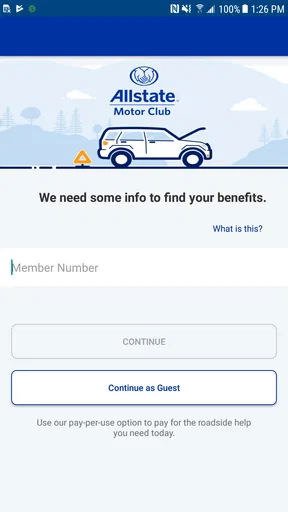
My practical advice is to install it while the car is working normally. I would check that I can sign in, confirm that my contact details are usable, and make sure I know where the assistance option is located. I would also keep an alternative way to contact help available, such as a saved phone number or paper membership information. That is not a criticism of this particular app; it is sensible preparation for any roadside service, because a damaged phone, weak signal, or flat battery can make a digital-only plan unreliable.
The app’s free download is helpful here. There is little reason to postpone installation if I already use the related motor club service. Still, “free” describes the app itself, not a promise that every roadside service interaction is free or that every driver automatically has the same membership benefits. I would verify my own plan before relying on it for a long journey. The application should make access more convenient, but the membership terms remain the important part.
Where it helps during a realistic roadside problem
Imagine leaving work on a cold evening and finding that the car will not start. In that situation, I do not want to compare several roadside companies, explain the problem repeatedly, or hunt for account information in an old email. A motor club app can reduce those steps by giving me a familiar starting point. I can concentrate on moving to a safe place, describing the vehicle accurately, and staying available for updates rather than dealing with a completely unfamiliar service.
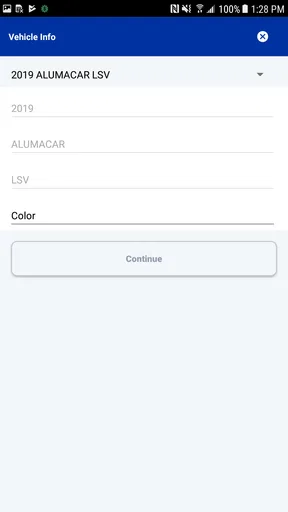
The most useful habit is to prepare the information that assistance will need before submitting a request. I would note the exact location, nearby landmarks, vehicle make and model, colour, and the nature of the problem. If the car is blocking traffic or is parked on a dangerous shoulder, I would say that clearly. An app can organize the request, but it cannot replace a precise description from the driver. Better information usually means less back-and-forth and a smoother handoff to the roadside provider.
There is also a safety trade-off. A phone screen can be distracting, especially beside moving traffic or in poor weather. I would not try to complete a complicated process while standing in an unsafe position. First I would protect the passengers, move away from traffic when possible, and use hazard lights where appropriate. The application is most helpful when used as part of a calm roadside routine, not as something that encourages me to keep staring at the screen.
How it compares with ordinary alternatives
The usual alternatives are calling a roadside number, using an insurance company’s assistance feature, contacting a vehicle manufacturer’s service, or searching for an independent towing company. Allstate Motor Club has a clear advantage when I already belong to the club: the service is organized around that relationship instead of forcing me to start from zero. A general search may show more choices, but more choices are not necessarily better when I am stranded and need a dependable next step.
A phone call can still be better in several situations. If the phone is old, the connection is unstable, the app is unavailable, or another person is helping me from a different device, voice support may be faster. An insurance app may be more convenient for someone who already handles claims and roadside assistance in one place. A manufacturer app may be preferable for a newer vehicle owner who wants brand-specific support. I would choose the motor club app for membership-based roadside access, not because it is automatically the best tool for every type of vehicle problem.
It is also important not to confuse roadside assistance with maintenance. The app may help me respond to a breakdown, but it does not turn into a service schedule, inspection record, repair shop, or diagnostic scanner. I still need normal oil changes, tyre checks, battery care, and inspections through the usual channels. That distinction determines whether the app earns a place on my phone: it is a safety net, not a complete ownership companion.
Month-to-month value depends on whether I actually drive
After the novelty fades, the app becomes quiet. That is not necessarily a weakness. I do not want a roadside tool demanding attention every week or filling my phone with unnecessary prompts. Its recurring value comes from being ready for the occasional unpleasant event. For a commuter, frequent road-tripper, or household with several drivers, that readiness can justify keeping it installed even when months pass without a request.
For someone who drives only a few times a month, the calculation is different. A rarely used app may be easy to forget, and forgotten login details reduce its value precisely when help is needed. In that case, I would open it periodically, especially before a long trip, to confirm that access still works and that my personal information is current. This is a small maintenance task, but it prevents the application from becoming a false source of confidence.
Families can get more practical value from it if they agree on a simple procedure. I would show other regular drivers where to find the assistance function, what information to provide, and when to call emergency services instead. A teenager or occasional driver may know the app exists but still freeze during a breakdown. A short conversation before trouble occurs is more useful than assuming the icon alone solves the problem.
The app’s audience is reflected in its scale: it has passed one hundred thousand installs, with an average rating of 3.4 from around 780 ratings and about 500 written reviews. I read that as a sign of a useful but not universally smooth experience. A middle-range rating does not make the concept poor, but it does remind me that roadside apps are judged under stressful conditions. A minor sign-in or location issue feels much more serious when the car has stopped at night.
What I would check before depending on it
Before a trip, I would confirm three things. First, I would make sure the account or membership connection is accessible. Second, I would check that the phone can provide a usable location and that mobile connectivity is available along the route as far as I can reasonably tell. Third, I would save a non-app fallback. This workflow is more dependable than assuming any single digital tool will work perfectly in a remote area.
I would also think about who is covered and which vehicle is associated with the service. Roadside plans can be confusing when a household has multiple cars or when a friend borrows a vehicle. The app may make account access easier, but I would not guess about eligibility during an emergency. Reading the membership information in advance is less stressful than discovering a coverage question beside a disabled car.
Another useful habit is to keep the phone charged before travelling. That sounds obvious, but it is particularly important for a service app because the phone may need to handle location, communication, and follow-up at the same time. I would carry a charging cable or battery pack on longer drives. The application cannot compensate for a dead device, and this is one of the clearest differences between convenient access and genuine emergency readiness.
Maintenance is light, but not zero
The maintenance burden is modest. I would keep the app updated, open it before an important journey, and make sure the account details remain accurate. Because the app is currently at version 21.1.0, I would not assume that an old installation behaves exactly like the current release. Updates can matter for compatibility and reliability, particularly on Android phones that have gone through several system changes.
At the same time, I would avoid treating every update as proof that the service has become better for my particular situation. The important test is whether I can reach the right assistance path without confusion. If a redesign changes the location of that function, I would spend a minute learning it while at home rather than during a breakdown. This is a small but non-obvious advantage of periodic practice: it turns an unfamiliar emergency screen into a remembered routine.
Storage and attention are the other maintenance costs. Since the app is free, the main question is not purchase price but whether it deserves space on a phone that is already crowded. For an active member, the answer is usually yes because emergency readiness has value even during long quiet periods. For a non-member or someone who has a better-established roadside option through insurance, keeping another assistance app may create confusion instead of reducing it.
Where fatigue can appear over time
The first source of fatigue is infrequent use. An app that sits untouched for months can feel less trustworthy simply because I have not practised with it. The solution is not constant checking; it is a brief pre-trip review. I would rather spend a minute confirming access before a holiday drive than discover that I no longer remember the sign-in process when the engine will not start.
The second source is expectation. The phrase “motor club” can make people expect a broad vehicle-management platform, but I would keep my expectations focused on roadside assistance. If I want fuel tracking, maintenance reminders, repair estimates, parking tools, or detailed vehicle diagnostics, I would look for a dedicated automotive app or use the car maker’s system. Installing this app for those unrelated jobs would make it seem limited because those are not the tasks it is designed to handle.
The third source is the gap between digital convenience and real-world response. A clean request screen cannot guarantee that assistance arrives immediately, that the location is easy to reach, or that the problem can be fixed on the spot. Weather, traffic, road access, and the type of failure still matter. I appreciate the app most when I see it as a coordination tool rather than a promise that every breakdown will be resolved quickly.
There is a further trade-off for people who prefer complete control. Calling a known local provider may allow a driver to ask questions directly and choose a particular company. The motor club route may be less flexible, but it can be simpler for members who do not want to research providers while stranded. I would choose flexibility when I already have a trusted local mechanic nearby, and membership convenience when I am travelling somewhere unfamiliar.
Who should keep it installed?
I would recommend keeping Allstate Motor Club installed if I already use the associated motor club service, drive regularly, or often travel far from home. It is especially sensible for drivers who want one prepared route to roadside help instead of relying on a last-minute web search. It can also be useful in a family setup where several people need to know the same basic assistance process.
I would be more cautious for someone who never uses the service, has roadside assistance fully integrated into another app, or rarely carries a phone capable of running it. In those cases, a second emergency app may add clutter without adding meaningful protection. I would also skip relying on it as my only option in remote travel. A charged phone, offline contact information, and a basic safety plan remain important regardless of which assistance app I choose.
For older Android users, the minimum operating system requirement of Android 6.0 is relatively accommodating. That makes the app a possible option for people who do not replace phones frequently. Still, operating-system compatibility is only one part of the experience. A phone with limited battery life, unreliable mobile data, or a difficult screen can still make emergency use frustrating. I would test the actual device, not just assume that meeting the minimum requirement guarantees comfort.
My long-term verdict after the novelty disappears
Allstate Motor Club earns lasting space when I judge it as a preparedness tool. Its value is quiet and conditional: I may not open it for weeks, but I can appreciate having a known path to roadside assistance when a vehicle problem interrupts the day. The free app, broad age rating, and support for older Android versions lower the barrier to keeping it ready, while the middle-of-the-road user rating suggests that I should maintain a backup plan rather than depend on it blindly.
I would not install it expecting a complete car-care dashboard or a replacement for a mechanic. I would install it, sign in, learn the assistance workflow, update it when needed, and review it before longer journeys. That routine keeps the maintenance burden small and protects against the most common failure: having an emergency app that I cannot use confidently when the emergency arrives.
My final recommendation is therefore practical rather than enthusiastic. If Allstate Motor Club matches your roadside membership, it is worth trying and keeping prepared. If another service already handles the same job more naturally for you, the advantage may be too small to justify another app. The lasting value is not daily engagement; it is dependable readiness when ordinary driving suddenly stops being ordinary.
Verdict
Strengths of Allstate Motor Club
- 24/7 roadside assistance is available when you need urgent help.
- Coverage can include towing, jump-starts, flat tires, and lockouts.
- Membership benefits may apply to multiple vehicles and drivers.
- The Allstate app can help request assistance and track service status.
- Useful travel and driving resources are included for members.
Limitations of Allstate Motor Club
- Membership fees add an ongoing cost for occasional drivers.
- Service limits and towing distances vary by membership plan.
- Availability and response times may differ by location and demand.
- Some benefits may require waiting periods before they become active.
- Non-Allstate customers may find plan options and pricing less straightforward.
Similar Picks in This Category
View All
Android Auto
Google LLC4.1

maxim — order a taxi & food
PT. SITO4.7

Штрафы ГИБДД: проверка с фото
Pays LLC – Штрафы ГИБДД4.7

Номерограм – проверка авто
Авто Ассист4.8

Дром Авто
Дром4.9

Frequently Asked Questions
What is Allstate Motor Club, and what services does it provide?
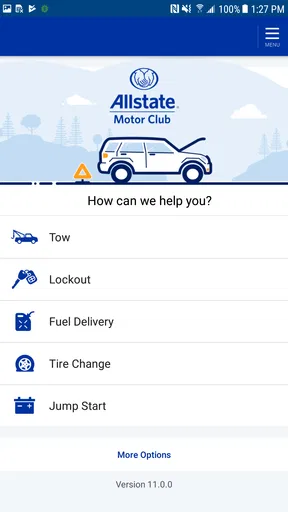
Allstate Motor Club is a roadside assistance service designed to help drivers when they experience common vehicle problems. Depending on the selected membership and location, assistance may include towing, jump-starts, flat-tire changes, fuel delivery, lockout service, and winching. The app can also help members request assistance, view membership information, and track service progress from a mobile device.
Do I need an Allstate insurance policy to use Allstate Motor Club?
An Allstate auto insurance policy is not necessarily required to join Allstate Motor Club. The motor club membership is generally offered as a separate roadside assistance service, although availability, pricing, and benefits can vary by state and membership plan. Before downloading or subscribing, review the current terms carefully to confirm eligibility, covered services, vehicle limits, and whether the plan meets your driving needs.
How do I request roadside assistance through the app?
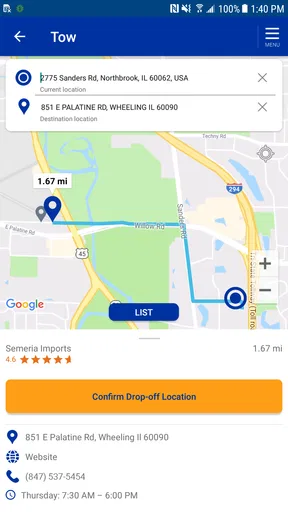
After signing in or providing the required membership details, you can typically request help by selecting the type of problem, confirming your vehicle’s location, and entering relevant information such as the make, model, and license plate. The app may provide updates about the assigned service provider and estimated arrival time. Accurate location information is important, especially when requesting help from a highway or unfamiliar area.
What roadside services are included, and are there additional charges?
Coverage depends on the membership plan, service limits, and local terms. Common benefits may include towing for a limited distance, battery jump-starts, tire changes, fuel delivery, vehicle lockout assistance, and winching. Some situations can involve extra fees, such as exceeding mileage limits, requesting specialized equipment, receiving more fuel than the plan provides, or using services excluded by the membership agreement.
Is Allstate Motor Club available everywhere, and what should I check before subscribing?
Allstate Motor Club availability and benefits can differ by state, country, membership type, and service provider network. Before subscribing, check the current price, renewal conditions, cancellation policy, waiting periods, covered vehicles, service-call limits, towing mileage, and exclusions. It is also wise to confirm that assistance is available in the areas where you regularly drive, particularly if you travel across state lines or internationally.
